
Sales conversion
Moving Company Follow-Up SOP: How Multi-Touch Cadences Double Booking Rates
Discover how leading moving companies use a structured 5-touch follow-up cadence, rapid speed-to-lead systems, and value-first messaging to turn 35%+ of estimates into profitable booked moves.

MoreMovesNow Editorial Team
· Updated · 10 min read
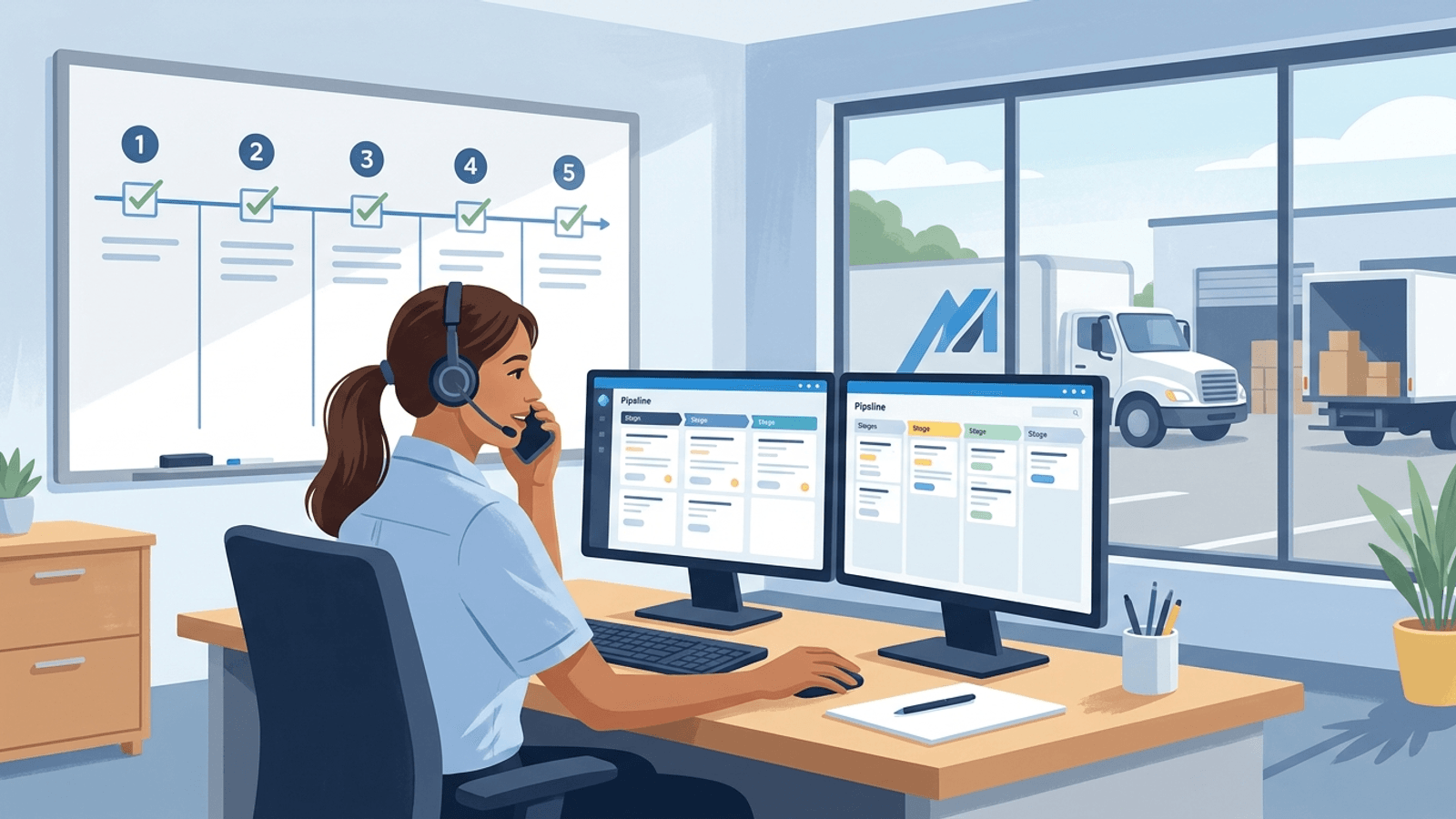
The most effective way for moving companies to increase revenue without buying more leads is implementing a structured 5-touch estimate follow-up Standard Operating Procedure (SOP). Over 50% of moving quotes are lost simply because the mover failed to follow up more than once, leaving prospective clients open to competitors who maintain consistent, professional communication.
Moving is one of the top five most stressful events in a consumer's life. Between coordinating utility shutoffs, mortgage closings, and packing boxes, homeowners experience decision paralysis. A proactive follow-up cadence does not bother the customer; when done with empathy and clarity, it reassures them that your company is organized, dependable, and capable of executing their move safely.
This guide sets the timing and the rules. For ready-to-edit wording at each step, see the moving company email templates.
Why 50% of moving quotes are lost in 24 hours
Industry sales tracking reveals a glaring vulnerability in moving company operations: the single-touch drop-off. Estimators invest 45 minutes conducting a virtual walkthrough or in-home survey, generate a detailed inventory quote, email the PDF—and never follow up again, or make only one half-hearted phone call two days later.
When you fail to establish rapid, structured follow-up:
- The prospect forgets your estimate specifics: After receiving three or four quotes, line items blur together. The mover who explains their quote clearly over the phone wins the contract.
- Doubt and hesitation set in: If a mover cannot follow up on an estimate reliably, how can the customer trust their 26-foot truck and crew will arrive on time on moving day?
- Competitors swoop in: Even if your price is fair, an active competitor with an automated SMS and phone follow-up sequence will capture the booking while your estimate sits unread in their spam folder.
The 5-touch estimate follow-up protocol
Top-performing moving operations replace erratic manual check-ins with an automated, multi-channel 5-touch sequence spread across the critical 10-day decision window:
- Touch 1 (Within 15 minutes of estimate delivery): A brief, friendly SMS notification: “Hi [First Name], John here from [Company]. Just sent your customized moving estimate for [Date] to your email! Take a look and let me know if you have any questions about truck size or crew hours.”
- Touch 2 (Day 2 – The Walkthrough Call): A phone call focused on answering questions rather than demanding a card. Review heavy specialty items (pianos, safes, gym equipment), confirm elevator reservations, and explain building protection protocols.
- Touch 3 (Day 4 – Social Proof & Risk Mitigation): An automated email highlighting your Certificate of Insurance (COI) capabilities, background-checked crew guarantees, and a link to 5-star video reviews from recent customers in their neighborhood.
- Touch 4 (Day 7 – Calendar Scarcity Check): A courteous call and SMS: “Hi [First Name], our dispatch calendar for the week of [Move Week] is nearing 80% capacity. Wanted to check in so we can hold your dedicated crew and truck before the date closes out.”
- Touch 5 (Day 10 – The Polite Breakup Email): A respectful close-out message: “Assuming your moving plans are set or you found another option! If you still need help or last-minute labor, our estimate remains valid until Friday. Wishing you an easy moving day!” (Surprisingly, this breakup touch often revives 15% of unresponsive leads).
Handling “I found a cheaper mover” without discounting
When a prospect objects that another company quoted $300 less, amateur sales reps panic and slash their labor rate, eroding job margins. Professional estimators win on risk mitigation and transparency:
1. Validate and probe: “I completely understand wanting to keep relocation costs reasonable. Did the other mover provide a binding flat estimate, or was that an hourly quote with minimums?”
2. Expose hidden fees: “Our quote includes shrink-wrap, commercial furniture blankets, mattress bags, fuel surcharges, stair carries, and $2M general liability building insurance. Many low-cost quotes omit equipment fees and tack them on during move day.”
3. Reframe around peace of mind: “With our crew, you get permanent W-2 uniformed movers with clean background checks, not day labor. For a difference of $250 on your family's life possessions, is it worth risking broken furniture or unexpected move-day delays?”
Orchestrating phone, SMS, and email follow-up
Different customers prefer different channels. Young professionals moving high-rise apartments respond to SMS within three minutes; older suburban homeowners often prefer an evening phone call. A modern moving CRM must orchestrate all three channels into a cohesive cadence:
| Channel | Best Use | Ideal Timing | Key Constraint |
|---|---|---|---|
| Direct Phone Call | In-depth inventory review, handling complex objections | 10:00 AM – 11:30 AM or 4:30 PM – 6:00 PM | Requires skilled sales staff; low answer rate on cold dials. |
| Two-Way SMS | Quick estimate confirmation, date availability updates | Immediate & mid-afternoon | Keep messages under 160 characters; adhere strictly to A2P 10DLC rules. |
| Personalized Email | Itemized PDF estimates, insurance COIs, packing tips | Morning dispatch hours | Must avoid image-heavy templates that trigger promotional folders. |
Follow-up examples for common moving situations
The same five touches work better when the wording fits the homeowner's situation. Adapt these examples to your voice and always use the customer's real details.
| Situation | Example message | Goal |
|---|---|---|
| Estimate sent, no reply | “Hi [First Name], just checking the estimate for your [Date] move reached you. Happy to adjust the inventory if anything changed.” | Confirm delivery and invite questions |
| Closing date not final | “Hi [First Name], once your closing date is set, tell me and I will hold a crew for you.” | Stay first in line without pressure |
| Price concern | “Hi [First Name], happy to walk through what is included so you can compare quotes like for like.” | Compare scope, not just price |
| Owner is comparing movers | “Hi [First Name], here is our insurance certificate and two recent reviews from [Neighborhood], in case they help your decision.” | Build trust with proof |
| Two weeks of silence | “Hi [First Name], I will close your file for now. If your plans change, reply to this email and I will pick it up.” | End politely and leave the door open |
When to stop following up
A good SOP says when to stop as clearly as when to send. Stop the sequence when any of these happens:
- The customer books: move them to your confirmation and moving-day messages.
- The customer says no or asks you to stop: mark the quote closed and send nothing more.
- The customer chose another mover: thank them, close the quote and set a reminder for a review request only if they have used you before.
- You have sent the final touch: after Touch 5, pause until the 30-day check-in below.
Reviving stalled quotes and off-peak pipelines
A quote that didn't book for this weekend isn't dead forever. Staged home sellers often delay their move by 30 or 60 days when closings get rescheduled.
Implement a 30-day stalled estimate reactivation campaign: once a month, send a personalized check-in to past unbooked quotes: “Hi [First Name], checking in to see if your closing date finalized! If your move is still upcoming, we can honor your previous estimate and apply our mid-week reservation credit.” This single SOP routinely yields 4 to 8 extra booked moves each month with zero additional advertising spend.
One mover per county
Reach home sellers before the quote rush
See the listing volume in your counties and how managed, personalized outreach works.
Book a 30-minute intro call